
Masseter Botox for Jaw Clenching
Two people book this appointment. One wakes up with a sore jaw and a headache and has been told by a dentist that they're grinding. The other wants a narrower lower face.
It's the same injection. It is not the same conversation, and the reason this treatment gets muddled is that practices tend to sell it as the second thing to people who came in for the first. If you're in the first group, you want a provider who stays in the first conversation with you.
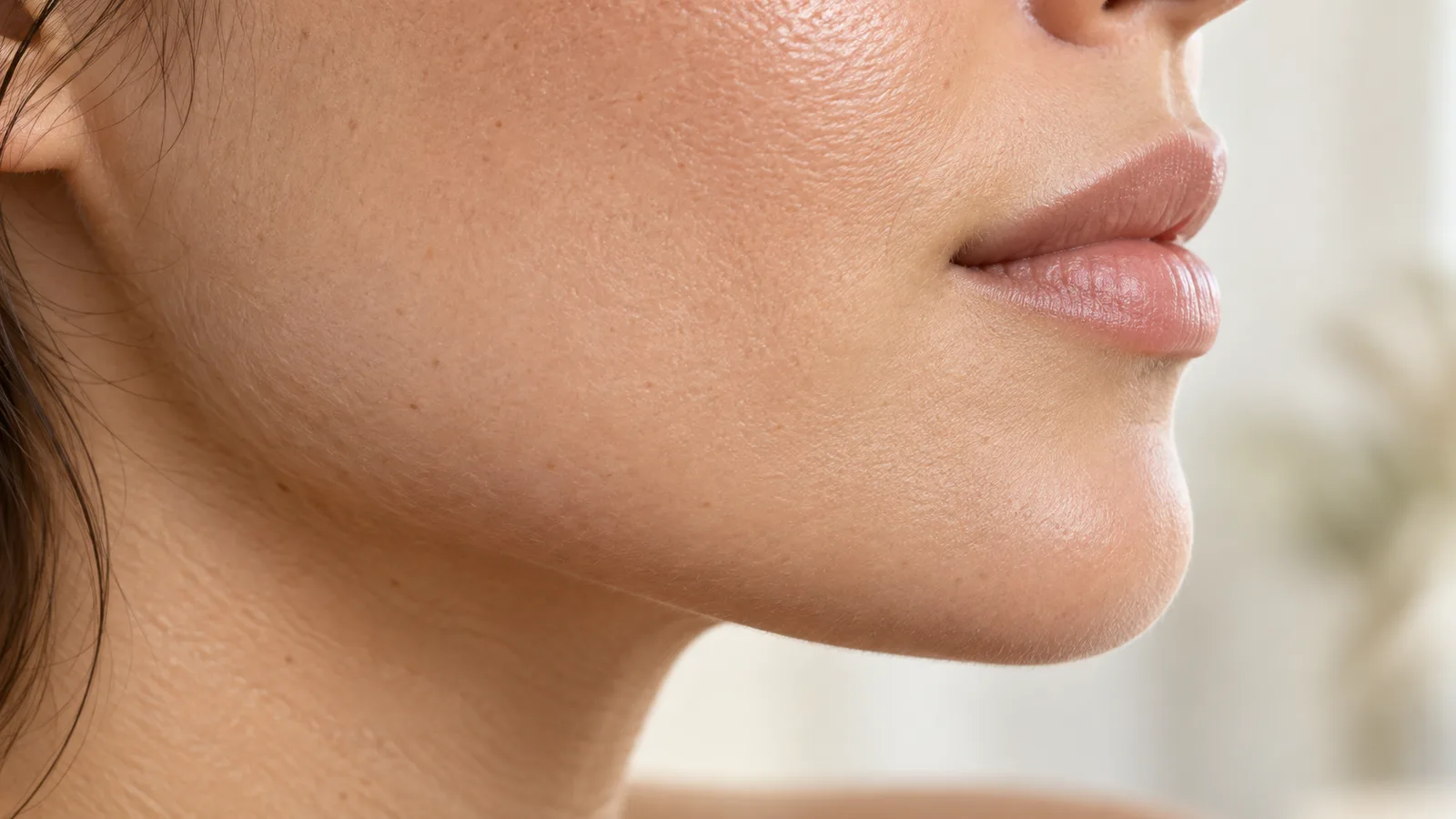
What the masseter is and what the injection does
Put your fingers on the corner of your jaw, just in front of your ear, and bite down. The slab of muscle that pops out is the masseter. It's one of the strongest muscles you have relative to its size, and its job is closing your jaw.
A neuromodulator injected into it does what neuromodulators do anywhere: it interrupts the signal telling that muscle to contract at full force. Clenching gets weaker. Over weeks to months, a muscle that isn't working as hard gets smaller, which is where the face-shape change comes from.
Two things follow from that. The pain relief, if you get it, arrives first, usually over a couple of weeks. The shape change arrives much later, over a couple of months, and only if the dosing and the repeat schedule support it.
It's also worth knowing that this use isn't one of the ones the products are formally labeled for in the US. That's ordinary in medicine and it isn't a red flag by itself. It does mean the protocols vary between providers more than they do for a forehead, so the experience of the person injecting matters more here.
What it can and can't fix
It can reduce the force of clenching. For a lot of people, that means less jaw ache in the morning and fewer of the headaches that come from the same source.
It doesn't stop grinding. The instruction to grind is coming from somewhere else, often sleep, often stress, sometimes an airway issue. Weakening the muscle turns the volume down on the consequence. It doesn't switch off the signal, and anyone describing it as a fix for bruxism is overselling.
It won't repair a joint problem. If the noise, locking, or pain is coming from the temporomandibular joint itself rather than the muscle, this is the wrong tool and you want that assessed properly first.
And it won't protect your teeth on its own. If you've been prescribed a night guard, the injection isn't a reason to stop wearing it.
The trade-offs people aren't told about
Chewing gets weaker, briefly and on purpose. Most people notice very little. Some notice that dense food, a bagel, steak, anything that wants sustained force, is more tiring for a few weeks. It settles as the effect wears off.
Dose is not a knob you want turned up. Too much, or product placed too far forward, can reach muscles involved in smiling and produce an uneven expression until it wears off. This is uncommon and it is temporary, and it's also the single best argument for choosing on experience rather than price.
The shape change is a commitment. Long-term slimming needs repeat treatment over a year or more. Stop, and the muscle gradually comes back. That's fine if you knew going in. It's an unpleasant surprise if you thought one round did it.
Some people get cheek hollowing they didn't want. If a lot of your lower face volume is that muscle, reducing it changes more than the jawline.
What a good consultation covers
Ask whether they think your problem is muscle, joint, or both, and how they can tell.
Ask what dose they're starting with and why, and whether they'd rather start lower and add at the two-week check. Starting conservatively and adding is the approach I'd want.
Tell them about any dental work, any night guard, any diagnosis you've already been given, and any difficulty you've had with chewing or with your jaw locking. This is the disclosure that changes the plan.
Ask what happens if it doesn't help. A provider who's already thought about the referral answer is a provider who's treated this properly before.
When to see someone else first
If your jaw locks, catches, or won't open fully, see a dentist or a specialist before booking an injection.
If the pain is one-sided and new, or came after an injury, same answer.
If you're being treated for a sleep disorder, mention the clenching to whoever is handling that, because the two are often connected and the connection is worth chasing.
None of that is a reason you can't have the treatment eventually. It's a reason to know what you're treating.
Finding someone who does these regularly
This is a treatment where I'd weight experience heavily. The anatomy is unforgiving of a millimeter in the wrong direction, and the providers who do it often have a feel for dosing that doesn't come out of a manual.
For something this technical I'd widen the search past walking distance without hesitating. Hoboken is close enough that people make that trip all the time and think nothing of it. Ethos is one nearby option; a physician leads the practice, and Botox is part of what they do. Its Botox page for the Hoboken location is at myethosspa.com/services/botox/hoboken-nj/, and it's fair to ask there how often they treat the masseter specifically. Staying local is fine too. To check a business is real and currently trading, the city's The Official Website of City of Union City, NJ - Home and the member rolls at the North Jersey Chamber of Commerce – How to Grow Your Business – Networking Events – North Jersey answer that narrow question. Neither one says anything about who has good hands.
Two scheduling notes. The effect takes about two weeks to show up, so don't book this the week before something that matters. And if your days run between lectures and labs, whether that's Hudson County Community College or Stevens Institute of Technology, pick a stretch where a few days of slightly tired chewing won't matter much.
Go in for the jaw pain. Let the face shape be a side effect you decided on separately.