
PRP Facial Cost and Sessions
The number you get quoted for a PRP facial is a per-session number. The thing you're being sold is a series. Those two facts sit in different sentences on most price menus, and the gap between them is where the unpleasant surprises live.
I want to take the bill apart, because once you see what's in it the sessions question mostly answers itself.
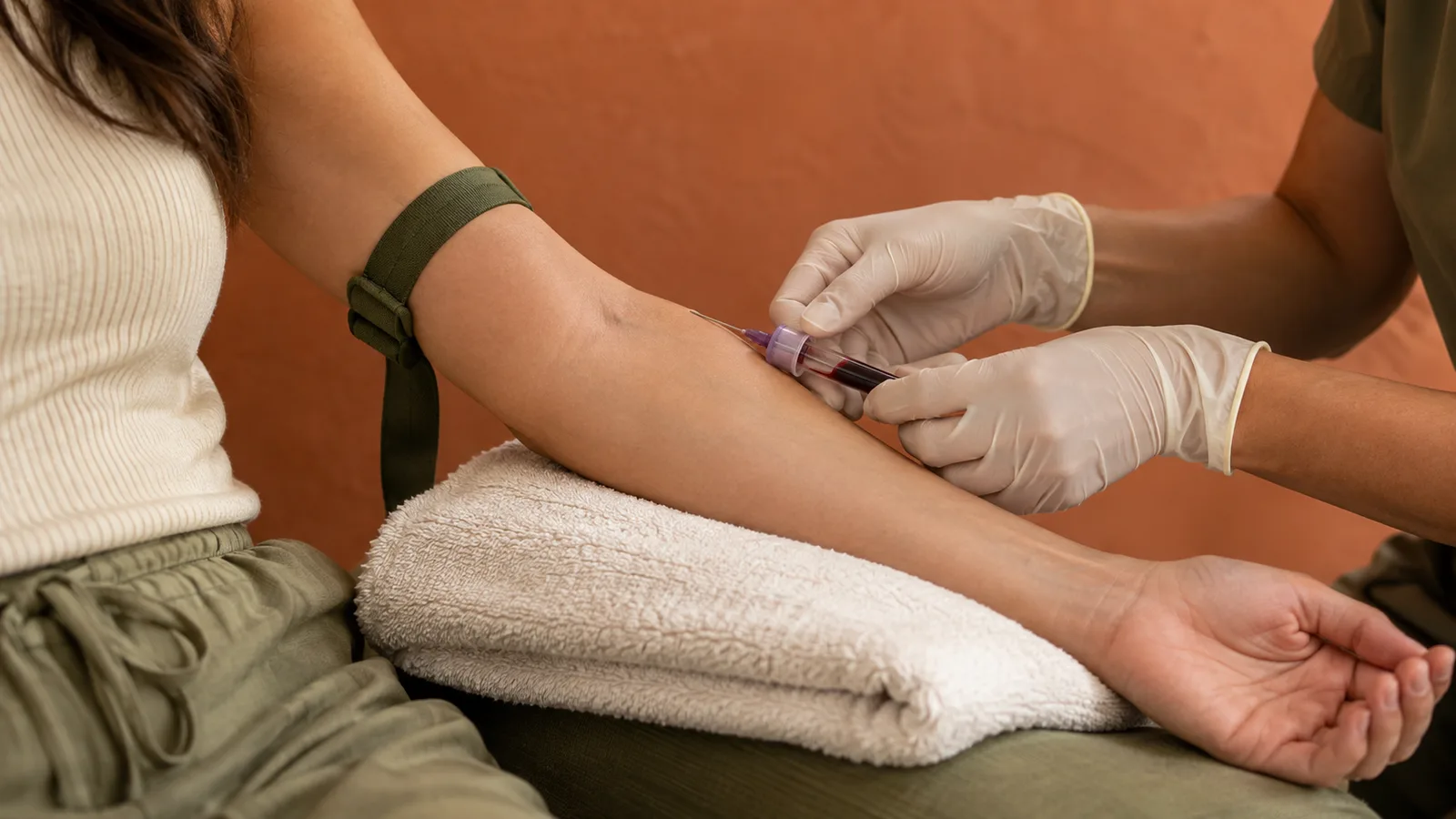
What you're actually paying for
A PRP facial isn't one procedure. It's three things stacked, and each one costs the practice something different.
There's the blood draw. Somebody qualified puts a needle in your arm and takes a small amount, the same as any routine draw. That requires a person who can do it and the disposables to do it with.
There's the spin. The tube goes into a centrifuge that separates the components by weight, and the fraction they want gets drawn off. The centrifuge and the separation kits are real equipment with real per-use costs, and the kits are single-use by design.
Then there's the treatment itself, which is almost always microneedling. The prepared material goes onto skin that's being needled so it can get past the surface. That part is a full microneedling appointment with everything that implies.
So when you compare two quotes, you're comparing three bundled things at once. A practice using a more expensive separation system isn't necessarily better, but it isn't necessarily gouging you either. Ask what's included rather than assuming.
Why it's priced per session and not per vial
People expect this to be priced like filler, where you can picture a syringe and count them. It isn't, and the reason is straightforward: the input is yours and there's no inventory to bill you for.
What varies between appointments is labor, disposables, and room time, all of which are roughly constant per visit. That's why the per-session model is the honest one here, and why a per-vial or per-tube quote should make you curious about what's being counted.
The corollary is less fun. Because the cost sits in the visit rather than the product, doing more sessions costs proportionally more. There's no bulk discount hiding in the biology.
How many sessions the evidence supports
The usual recommendation lands around three treatments spaced roughly four to six weeks apart, with maintenance sometimes suggested after that.
That spacing isn't arbitrary. Collagen remodeling after a needling session runs over weeks, and going back in before the previous round has done its work means paying for an appointment that overlaps itself. Going back much later than six weeks isn't harmful, it just loosens the effect of stacking.
Here's the part worth being clear-eyed about. The published evidence for adding PRP to microneedling is reasonable but not overwhelming, and much of it involves small studies and varied preparation methods. Most people see some improvement in texture and in the appearance of shallow scarring. Nobody can tell you in advance how much you personally will see, and a provider who offers you a number is telling you about their sales training rather than your skin.
The stopping-at-two problem
If money is tight, the tempting plan is to book one, see how it goes, and decide.
That's a worse deal than it looks. A series treatment is front-loaded in cost and back-loaded in result. One session buys you the appointment, the disposables, and a modest change that's hard to read at four weeks. The third session is where people usually say the difference became obvious. Stopping at two means you paid roughly two-thirds of the money for substantially less than two-thirds of the benefit.
So the real question before you book isn't "can I afford one." It's "can I afford three, spaced over about three months, without the third one becoming the thing I cancel." If the answer is no, a single cheaper treatment you finish is a better use of the money than a series you abandon.
Packages, carefully
Most practices will offer a package of three at some discount. Packages are fine when two conditions hold.
You were going to do all three anyway, on clinical grounds rather than because you'd already paid. And the terms are written down: what happens if you need to postpone, what happens if a provider recommends stopping, whether the sessions expire.
Ask what happens if you have to move a session by a month. The answer tells you whether the package is a discount or a retention device.
Questions that get a real number
Ask what the quoted session includes, specifically whether numbing and the follow-up check are inside it.
Ask how many sessions they'd recommend for your skin and what they'd expect to see after each one. A specific, hedged answer is a good sign.
Ask what the price is for a fourth or maintenance session, because that's the number that determines what this costs you over a year rather than a quarter.
Ask what the plan is if the first two sessions do very little. A practice with an honest answer to that question is worth paying slightly more for.
Where to have it done
Because this is a series, proximity is a cost input, not a preference. Three appointments plus a check means at least four trips, and the one you'll skip is the one that's a hassle. Somewhere along a route you already travel beats somewhere marginally cheaper that you'll come to resent.
Up here that often means looking past Bergenline and over toward Hoboken, which is a ten-minute problem rather than a real one. For PRP facials, one option there is Ethos, a doctor-led practice that does them alongside its injectables. If you'd rather stay local, the city's own The Official Website of City of Union City, NJ - Home will at least tell you a business is registered and trading, and the member rolls at the North Jersey Chamber of Commerce – How to Grow Your Business – Networking Events – North Jersey show which operations have been around a while. Neither speaks to clinical skill. Use them to rule places out, never to rule one in.
One scheduling note that people underrate: if your year runs on the Union City Public Schools calendar, map the three sessions onto it before you book the first one. A series that collides with a week you can't move is a series that becomes two.
Price the whole course, book the whole course, and finish it. That's most of the advice.